
Economic Outlook 2026: Measured Growth Shapes Hospitality Outlook 2026

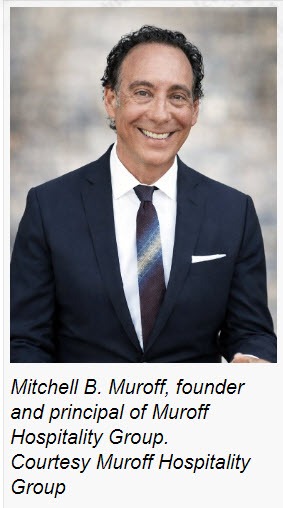
Mitchell B. Muroff, Esq., Founder, Muroff Hospitality Group
As we look ahead to 2026, the hospitality industry enters the year on far more stable footing than many anticipated just a few years ago. While 2025 was marked by moderation rather than acceleration, it ultimately proved to be a year of normalization—one that set the stage for measured, sustainable growth rather than speculative excess.
Nationally, 2025 saw travel demand remain resilient despite higher interest rates, inflationary pressures, and continued labor challenges. Leisure travel continued to outperform expectations, particularly in drive-to markets and experience-based destinations. According to STR data, a CoStar company, occupancy stabilized across most U.S. markets, average daily rates held firm, and revenue per available room posted modest but consistent gains. Importantly, hotel fundamentals remained strong even as transaction volume slowed, reflecting a market adjusting to higher capital costs rather than weaker demand.
As we move into 2026, national forecasts from major hospitality analysts such as CBRE and JLL point to continued incremental growth rather than dramatic swings. New hotel supply remains constrained due to elevated construction costs and financing hurdles, which is expected to support pricing power for existing assets. At the same time, easing inflation and the potential for lower interest rates later in the year could help unlock transaction activity that has been sidelined since mid-2023. Investors are increasingly focused on well-located, operationally sound assets with clear paths to efficiency and modest value-add, rather than large-scale redevelopment or speculative growth.
For the Northeast—particularly New York and New England—the outlook for 2026 is especially encouraging. The region benefits from a dense population base, strong seasonal tourism, and a growing preference for regional travel over long-haul destinations. Unlike gateway cities that rely heavily on international travel or large convention demand, many Northeast markets are driven by leisure travelers, outdoor recreation, weddings and events, and repeat visitation—segments that have proven durable through multiple economic cycles.
In Upstate New York and across the broader Northeast, we continue to see strength in select-service and economy-branded hotels, as well as independent properties that cater to experiential travel. These assets tend to perform well in uncertain economic environments because they appeal to value-conscious travelers while still capturing strong seasonal demand. Branded select-service hotels benefit from loyalty programs and centralized marketing, while independent operators who actively manage expenses and guest experience can outperform expectations, particularly in tourist-driven markets. Other industry observers, including HVS, have similarly noted the resilience of leisure-oriented regional markets and well-located select-service hotels relative to convention- and gateway-dependent assets.
Nowhere is this more evident than in the Capital Region, Saratoga, Glens Falls, and the greater Adirondack and Lake George markets. These areas are fundamentally leisure-oriented destinations, supported by outdoor recreation, cultural attractions, seasonal events, and a steady flow of regional visitors from New York City, New Jersey, Montreal, and New England. Unlike urban markets dependent on corporate travel or convention business, these regions benefit from diversified demand drivers that are less sensitive to economic volatility.
Lake George and the Adirondacks, in particular, continue to attract buyers and operators focused on long-term ownership rather than short-term yield. Many properties in these markets are family-owned, independent hotels that have operated successfully for decades. As generational ownership transitions continue, 2026 is likely to bring increased listing activity, particularly among owners who weathered the post-pandemic recovery and now see an opportunity to capitalize on stabilized earnings. Buyers, meanwhile, remain active—especially owner-operators and regional investors seeking lifestyle assets with strong seasonal cash flow.
Saratoga Springs and the surrounding Capital Region benefit from a slightly different but complementary dynamic. Events such as the Saratoga Race Course season, regional colleges, medical institutions, and state government activity provide a blend of leisure and weekday demand that supports year-round operations. Select-service hotels in these markets continue to perform well, and investors remain attracted to assets that combine predictable demand with manageable operating complexity.
Looking ahead to 2026, the key themes shaping the hospitality outlook are discipline, adaptability, and local market knowledge. Rising operating costs and labor challenges are not disappearing overnight, but experienced operators are learning to manage them more effectively. Technology adoption, smarter staffing models, and selective capital improvements are helping hotels protect margins without sacrificing guest experience.
In summary, 2026 is shaping up to be a year of opportunity for the hospitality industry—particularly in leisure-driven, regional markets like those served by the Saratoga and Glens Falls Business Journals. While the era of easy money is behind us, the fundamentals of travel demand remain strong. For owners, investors, and operators who understand their markets and manage with discipline, the year ahead offers stability, selective growth, and renewed confidence in the long-term value of hospitality real estate.
Mitchell B. Muroff, Esq. is founder and principal of Muroff Hospitality Group, a boutique real estate brokerage specializing in the sale of hotels, inns, resorts, and hospitality assets throughout New York State and New England.